October is bringing some interesting developments to San Francisco, and several could have lasting implications for our real estate market.
For starters, the San Francisco school board has taken a major step toward replacing our longstanding school lottery with neighborhood-based assignments. It's a change that could eventually influence property values across the city.
Meanwhile, mortgage rates have climbed again, but you'd hardly know it from the competition for certain San Francisco homes. It's another example of our increasingly K-shaped economy, where different segments of the population are having dramatically different financial experiences.
We're also approaching an important November election and our housing inventory remains remarkably tight.
Let's take a closer look at what's happening and what it could mean for you.
Neighborhood Schools Are Coming Back. Could Your Home Become More Valuable?
In a significant decision for San Francisco families, the Board of Education voted 5-2 on October 13 to move toward replacing the city's longstanding elementary school lottery with a neighborhood-based assignment system.
Under the proposed approach, families would be guaranteed access to a designated neighborhood school based on their home address, while retaining some opportunities to apply to specialized programs elsewhere. The new system is expected to begin with the 2028-29 school year, with final details and attendance boundaries still to be determined.
For anyone who has raised children in San Francisco, this is a big deal.
For years, buying a home near an excellent public elementary school provided no guarantee that your children would actually attend it. Families sometimes found themselves traveling across the city every morning, even when a desirable school was just blocks from their front door.
But there's another important question: What will this mean for property values?
In communities where school enrollment is tied to residential addresses, access to highly rated public schools has long influenced home prices. Buyers often pay a premium for homes located within desirable school boundaries.
San Francisco has historically been different. Our lottery system largely separated school choice from real estate decisions.
That may be about to change.
We suspect we could eventually see increased demand for homes within the boundaries of particularly sought-after elementary schools, especially from young families. At the same time, the policy raises important questions about equity, school resources, and whether housing prices could become another barrier to educational opportunity.
It’s certainly something we'll be following closely.
Mortgage Rates and the K-Shaped Economy: A Tale of Two Housing Markets
Mortgage rates are climbing again. As of October 15, the average 30-year fixed mortgage rate reached 7.40%, up from 6.27% a year ago. While the Federal Reserve influences short-term borrowing costs, mortgage rates are more closely tied to the 10-year Treasury yield (see Chart in What Drives Mortgage Rates section below), which reflects expectations for inflation, economic growth, and future interest rates.
Across much of the country, higher borrowing costs are slowing home sales, increasing inventory, and putting pressure on prices. Yet San Francisco continues to see multiple offers and substantial overbidding for desirable properties.
Why the disconnect? Part of the explanation lies in our increasingly K-shaped economy, where wealthier households benefit from rising investment values while others struggle with inflation, debt, and housing affordability.
San Francisco's concentration of technology wealth, stock compensation, and cash buyers means some purchasers are less sensitive to mortgage rates. Meanwhile, buyers who depend on financing face increasingly difficult affordability challenges.
The result is a tale of two housing markets: one where buyers are pulling back, and another where competition remains fierce. It's also a reminder that the gap between those who own assets and those trying to acquire them continues to widen, particularly in expensive markets like San Francisco.
Election Season: What Happens Next, and Why Homeowners Should Pay Attention
With the November 3 election approaching, voters face decisions that could influence San Francisco's housing policies, transportation, public services, and financial future.
While national races tend to dominate the headlines, local ballot measures can have a much more immediate impact on the places we call home.
Several measures deserve particular attention this year.
Proposition C: Affordable Housing Funding
This measure would increase the amount of money San Francisco sets aside for affordable housing, expand certain housing assistance programs, and extend the city's Housing Trust Fund through 2058.
Proposition H: Muni Funding
This measure proposes a parcel tax to support public transit operations. Reliable public transportation contributes significantly to neighborhood accessibility, and transit quality can influence residential desirability and property values. In fact, according to the San Francisco Controller's Office, if the measure fails and the projected service cuts take effect, residential property values could decline by an estimated 0.6% to 0.9%, or approximately $9,400 to $14,100 for an average home.
Proposition I: Real Estate Transfer Taxes
This measure would dedicate revenue from the existing real estate transfer tax on properties valued at $10 million or more to affordable housing purposes. The debate centers on whether those revenues should be dedicated specifically to housing or remain available for other city needs.
Proposition J: Foreclosure Transfer Taxes
This measure would eliminate certain transfer tax exemptions associated with foreclosures and deeds in lieu of foreclosure, with exceptions for smaller residential and mixed-use properties. Although more specialized, it has potential implications for lenders, distressed properties, and certain real estate transactions.
Beyond these measures, the election's outcome could affect broader decisions about housing development, taxation, infrastructure, and city services.
San Francisco Inventory: Where Have All the Homes Gone?
While housing inventory is growing in many parts of the country, San Francisco continues to move in the opposite direction. And September's numbers tell a remarkable story. We ended the month with just 653 single-family homes and condos available for sale, compared with 954 in September 2025. That's approximately 32% fewer properties on the market. Even though September traditionally brings a surge of new listings after the summer slowdown, supply remains exceptionally tight.
Perhaps most striking is the competition we're seeing. In September, approximately 76% of all homes and condos sold above their asking prices, compared with 54% a year earlier. The median property went into contract in just 12 days. Single-family homes have been particularly competitive, selling for a median of nearly 29% above their asking prices.
That's an extraordinary statistic, although it's important to remember that San Francisco agents frequently use strategic underpricing to generate multiple offers. The relationship between asking and selling prices doesn't necessarily measure appreciation.
We’re also watching the condominium market closely.
After several years of relative weakness following the pandemic, condos are showing meaningful signs of recovery. September's median condo price reached $1.325 million, and available inventory fell substantially from last year.
Of course, not every condo is performing equally. Location, building quality, HOA costs, outdoor space, and overall condition continue to make a tremendous difference.
What's driving the shortage?
One factor is the mortgage rate lock-in effect. Many homeowners refinanced or purchased when interest rates were extraordinarily low and are understandably reluctant to give up those mortgages.
Others simply aren't motivated to move. And unlike markets with abundant new construction, San Francisco has limited opportunities to quickly expand its housing supply.
Meanwhile, demand for desirable homes remains strong.
For sellers, this creates opportunity, particularly when a property is thoughtfully prepared, marketed, and priced.
For buyers, it means recognizing that the national housing headlines don't necessarily describe what's happening here.
San Francisco has always been a market of microclimates, and understanding what's happening in an individual neighborhood is more important than ever.
The National Data
Mortgage Rates Top 7%
As of October 15, the average 30-year fixed mortgage rate stood at 7.40%, up sharply from 6.27% a year ago. For buyers already grappling with high home prices, limited inventory, and rising living expenses, the increase in borrowing costs adds yet another hurdle to homeownership. (Freddie Mac)
What Drives Mortgage Rates?
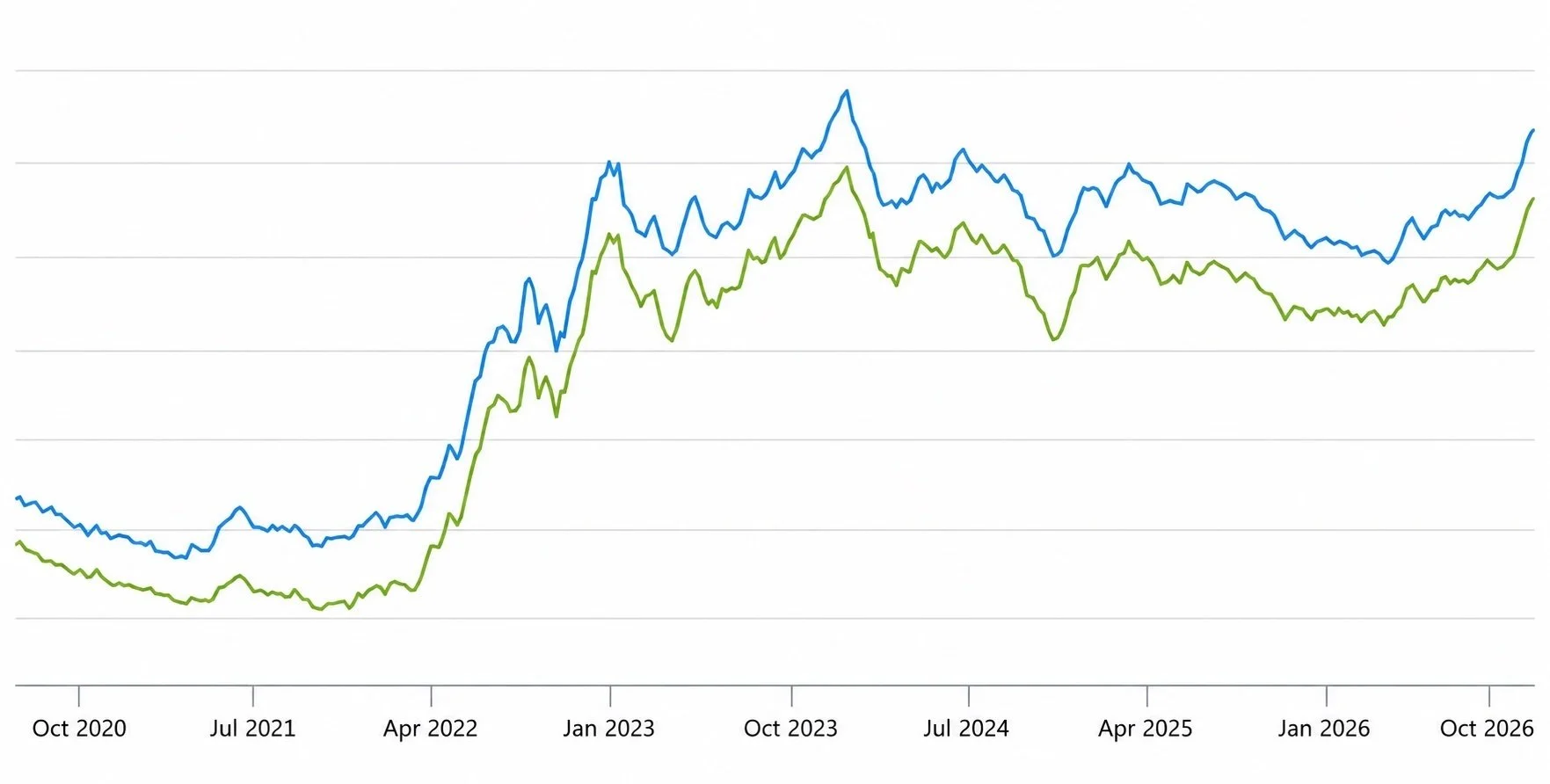
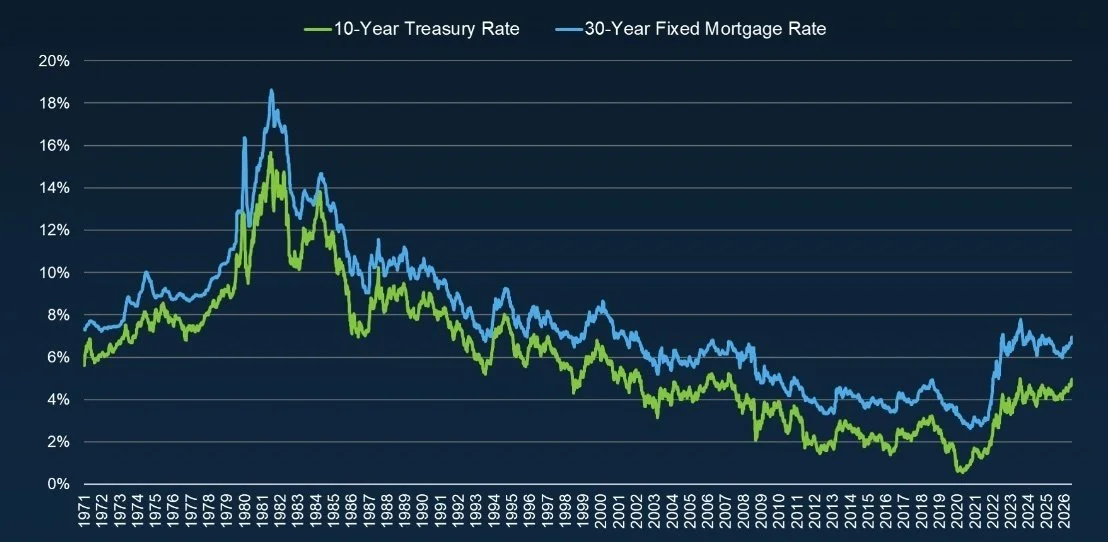
As this chart shows, 30-year mortgage rates closely follow the 10-year U.S. Treasury yield, although mortgage rates are typically higher due to additional lending risks and costs. Both rates have moved together over the decades, reaching historic lows in 2020-2021 before climbing sharply. The key takeaway? Mortgage rates are influenced less by the Fed's immediate actions and more by investors' expectations for inflation, economic growth, and future interest rates. (Freddie Mac)
Where Are Mortgage Rates Headed Next?
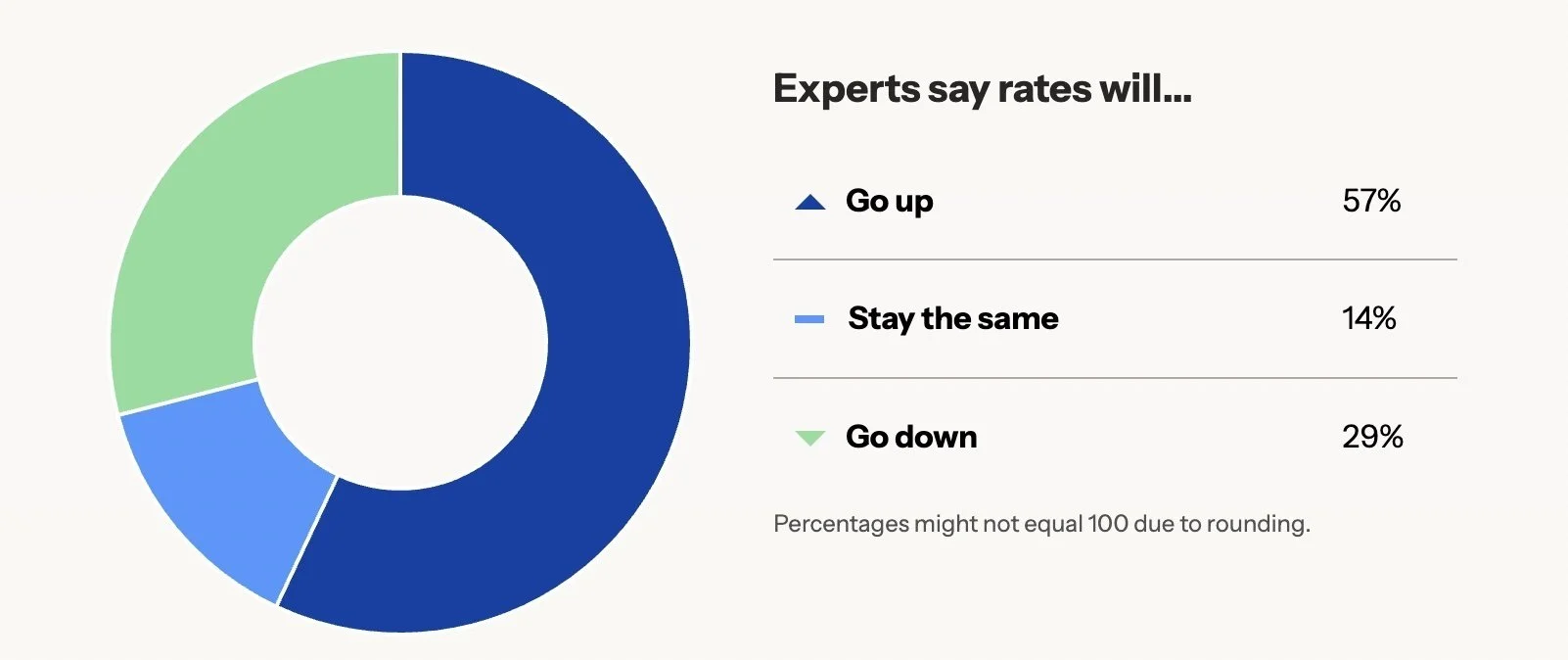
Mortgage rates remain unpredictable, but most experts anticipate further increases in the near term. According to Bankrate's recent survey, 57% expect rates to rise over the coming week, while 29% predict a decline and 14% expect little change. With borrowing costs remaining elevated, even modest rate fluctuations can affect buyers' purchasing power and monthly mortgage payments. (Bankrate)
Inflation Hits the Gas Pedal: Energy Prices Surge
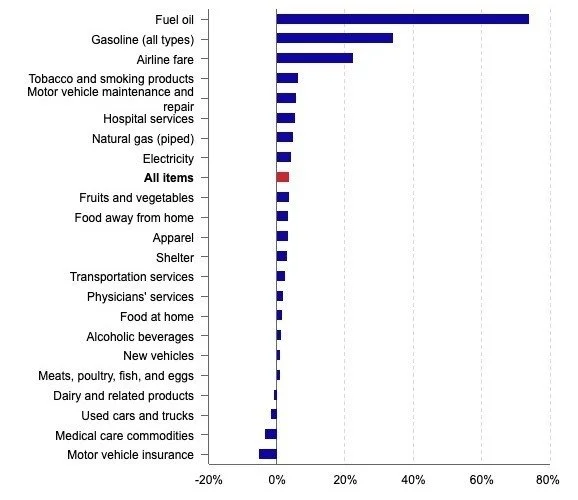
The U.S. annual inflation rate rose to 3.7% in September 2026, up from 3.4% in August, according to the Bureau of Labor Statistics. Energy costs saw some of the sharpest increases, with fuel oil prices jumping 74.2%, gasoline rising 34.2%, and airline fares climbing 22.4%. Meanwhile, shelter costs increased a more modest 3.2%, illustrating how unevenly rising prices are affecting different parts of the economy. (Bureau of Labor Statistics)
Federal Reserve Expected to Hold Rates Steady in October, With More Hikes Possible
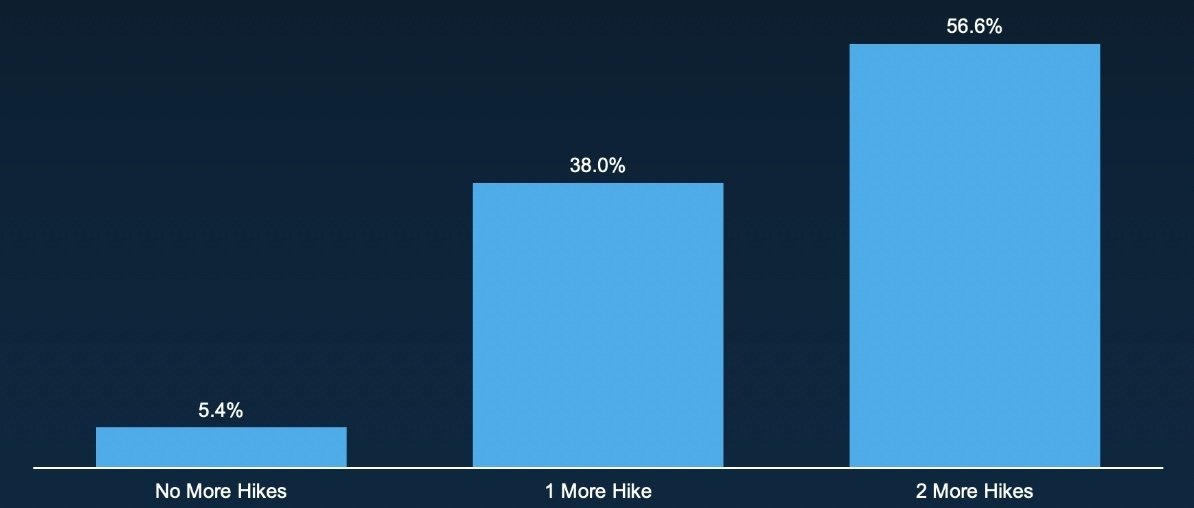
The Federal Reserve is widely expected to leave interest rates unchanged at its October 27-28 meeting, but additional increases may be ahead as inflation remains elevated. According to CME FedWatch data, investors see roughly an 85% chance of no change in October. Looking ahead to year-end, market expectations suggest a 56.6% probability of two additional rate hikes, a 38% probability of one hike, and just a 5.4% chance of no further increases. While the Fed does not directly set mortgage rates, its decisions influence broader borrowing costs and can affect the housing market. These forecasts are subject to change as new economic data becomes available. (CME FedWatch)
Cash Is King: Nearly One-Third of U.S. Homes Purchased Without a Mortgage
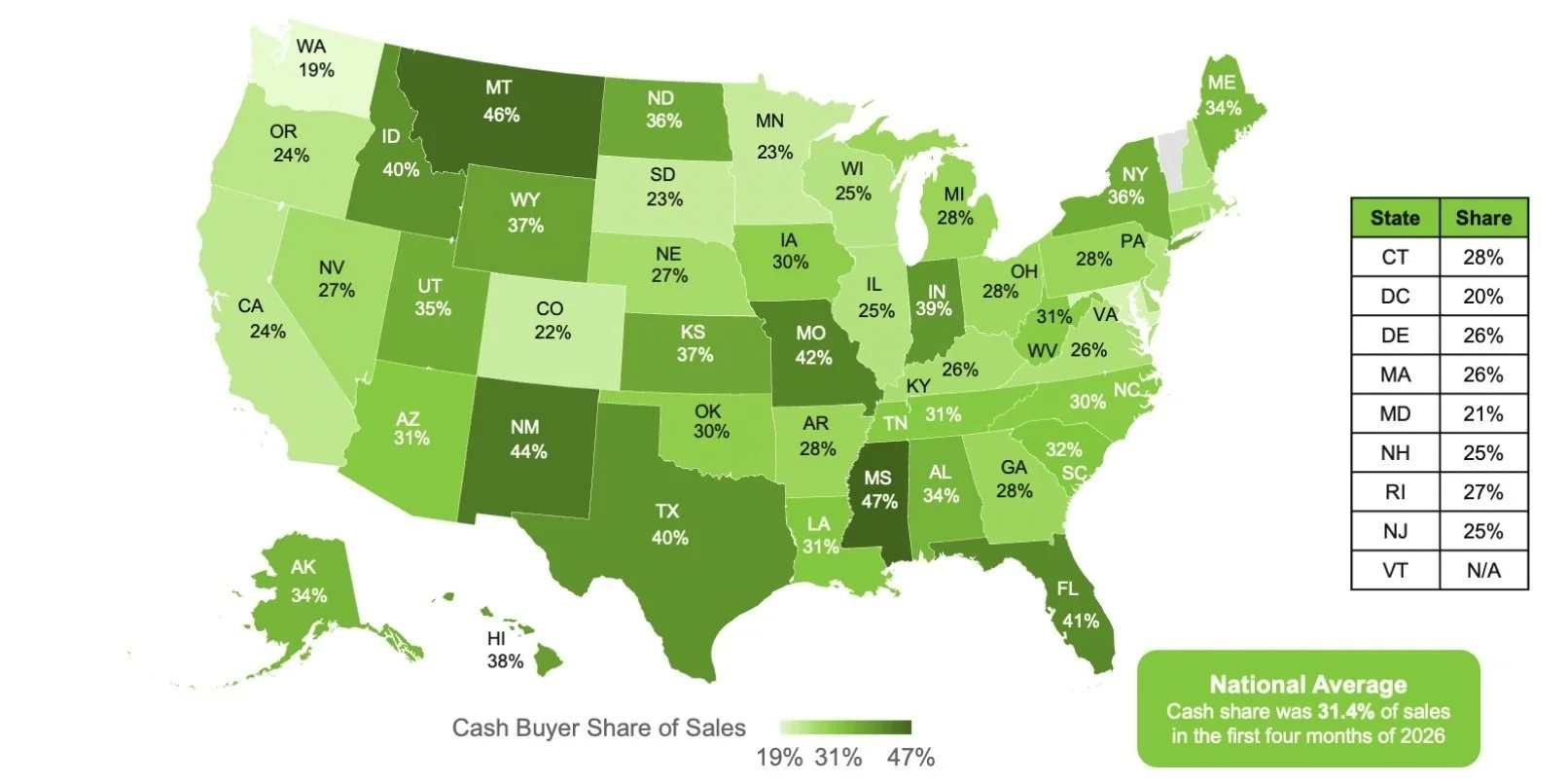
According to the National Association of Realtors (NAR), 31.4% of U.S. home sales were all-cash transactions during the first four months of 2026. The share varies significantly by state, from 19% in Washington to 47% in Mississippi, with California coming in at 24%. With mortgage rates remaining elevated, cash buyers have a distinct advantage, avoiding financing costs and often offering sellers greater certainty and faster closings. The prevalence of cash purchases also helps explain why some housing markets remain competitive despite high borrowing costs. (NAR, Realtor.com)
Cash Buyers Dominate Both Ends of the Housing Market
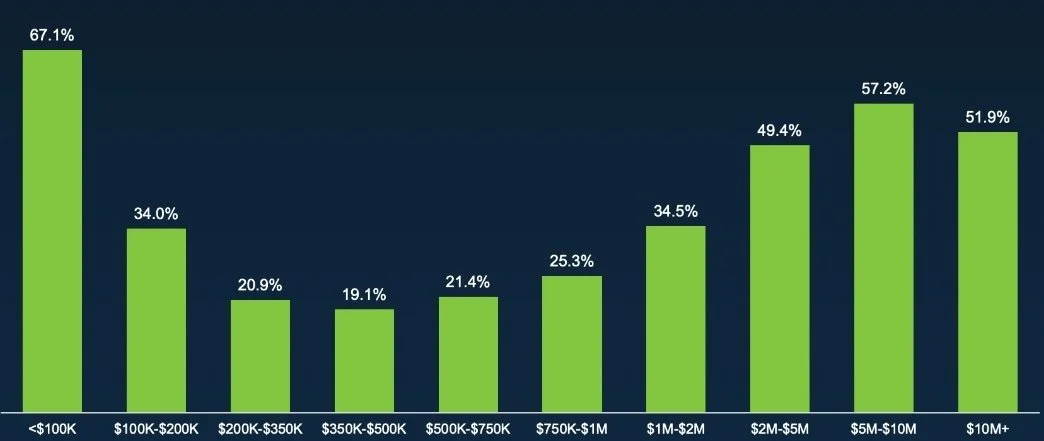
Interestingly, cash purchases are most common at both ends of the price spectrum. According to NAR, 67.1% of homes sold for under $100,000 were purchased with cash, compared with 57.2% of homes priced between $5 million and $10 million and 51.9% of homes above $10 million. In contrast, only about 19% to 21% of homes priced between $200,000 and $750,000 sold for cash. The data highlights two very different groups of buyers: those purchasing lower-priced properties without financing and affluent buyers with the resources to bypass mortgages altogether. (NAR, Realtor.com)
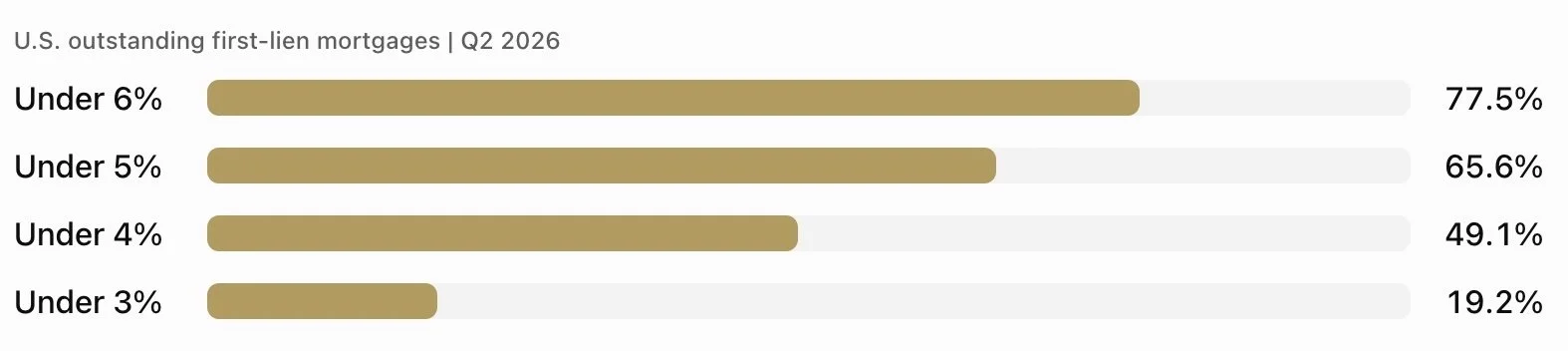
Nearly 78% of American Mortgage Holders Have Rates Below 6%
Nearly eight in ten Americans with outstanding mortgages are paying interest rates below 6%, according to the latest FHFA (Federal Housing Finance Agency) data. Almost half have rates below 4%, while nearly one in five enjoys a rate below 3%. In California, that last figure rises to 27%. These historically low rates continue to create a powerful incentive for homeowners to stay put, contributing to the persistent shortage of resale inventory, particularly in markets like San Francisco. (FHFA)
Local Data
San Francisco Market Snapshot: October 2026
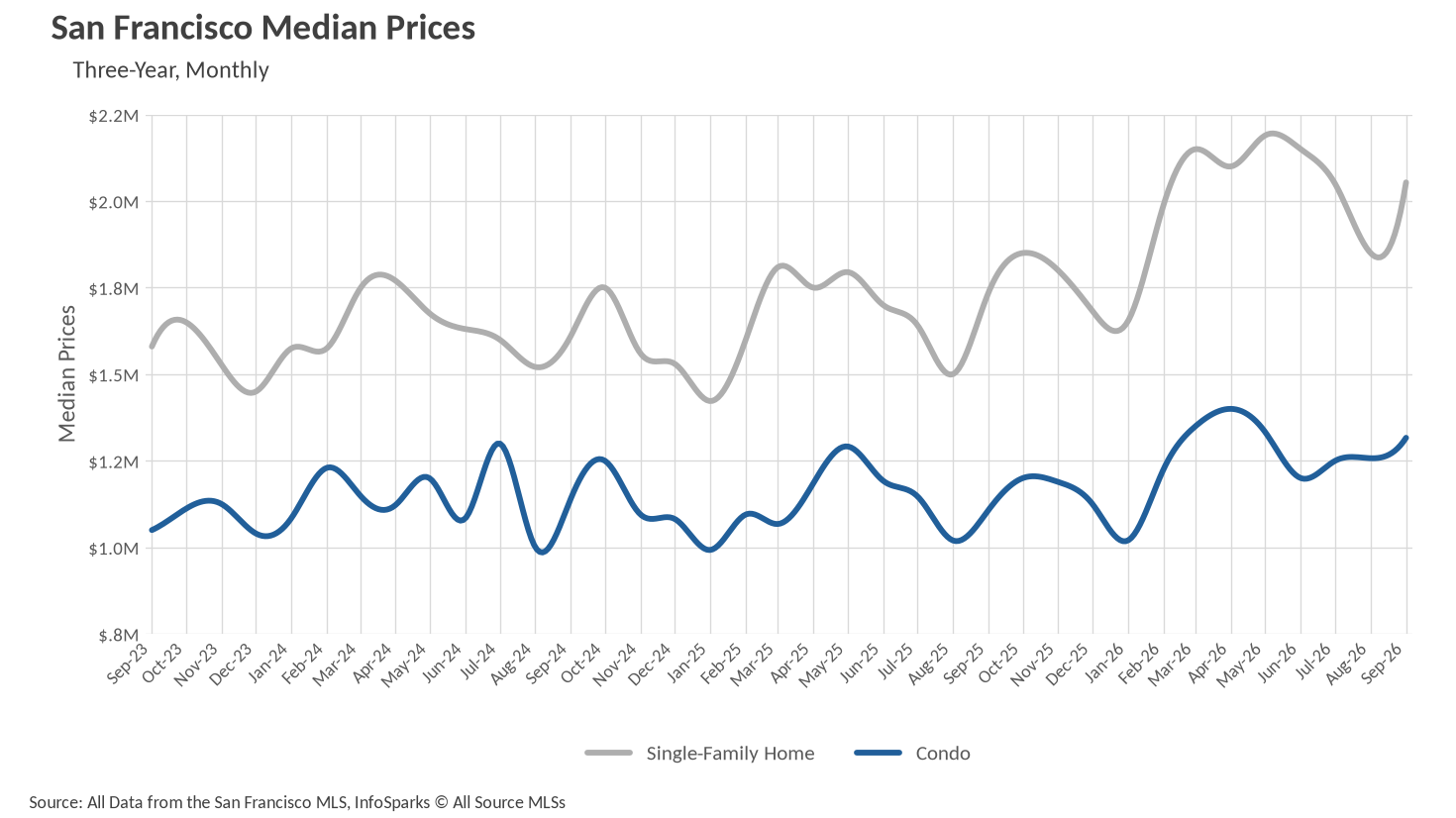
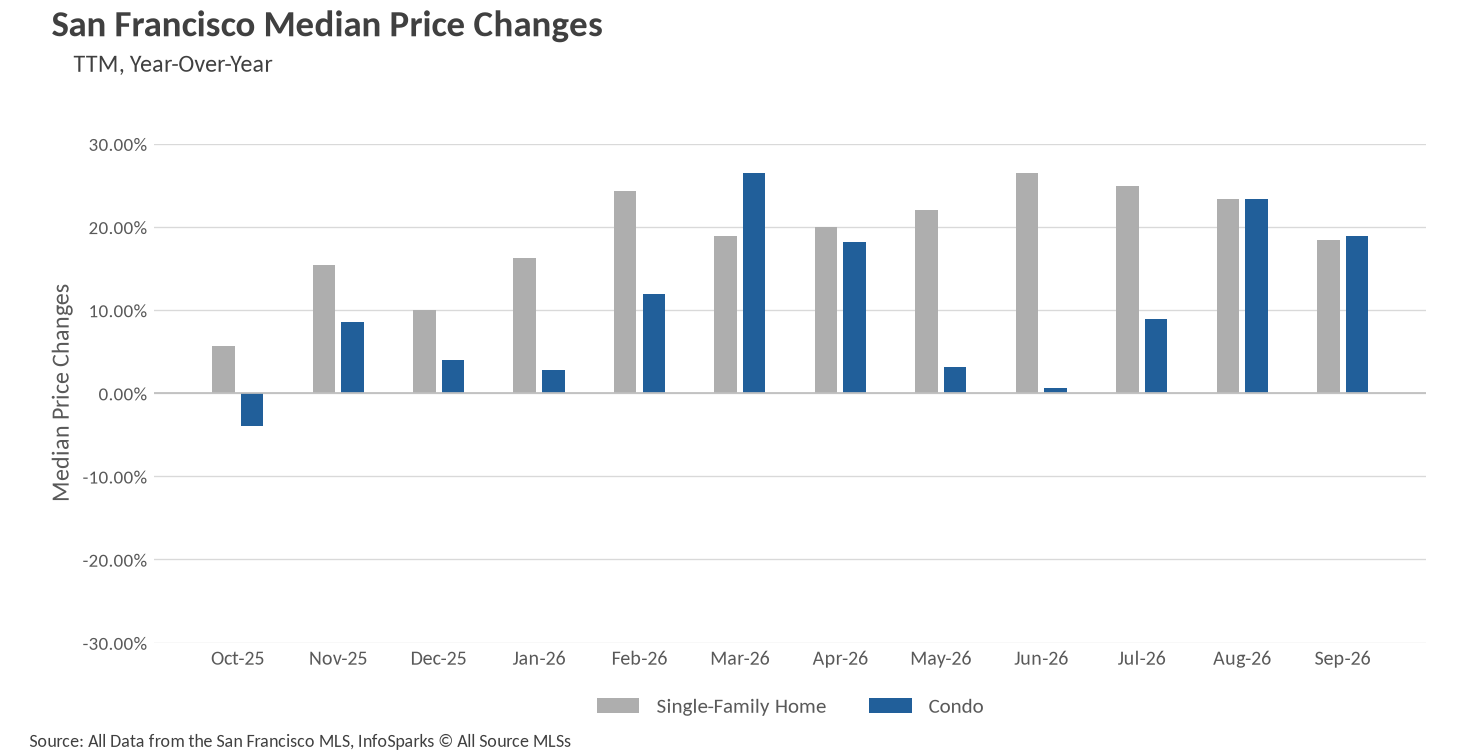
After a slower August, San Francisco's housing market came roaring back in September, with rising prices, fierce bidding competition, and exceptionally tight inventory. The median single-family home price climbed to $2,058,000, up 18.6% year-over-year, while the median condo price reached $1,325,000, an 19.6% increase from September 2025.
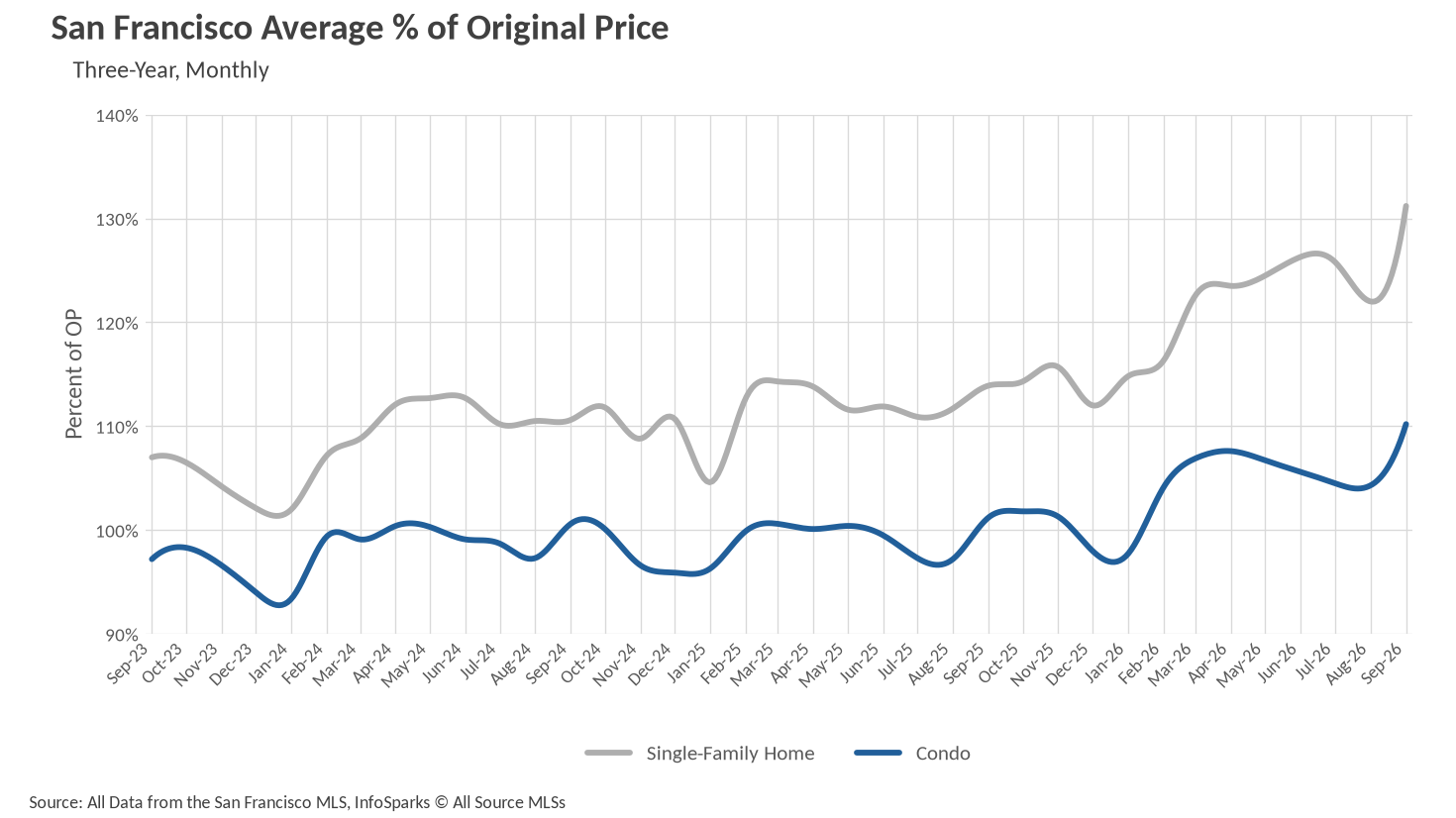
Competition was particularly intense, with single-family homes selling for an average of 29% above original asking price and condos averaging 10% over asking, both three-year highs. While strategic underpricing plays a role in these premiums, the numbers underscore the strength of buyer demand.
Inventory rebounded seasonally from summer lows but remains well below last year's levels, with single-family listings down approximately 23% and condo listings down nearly 32%. Homes are also moving remarkably quickly. Single-family homes sold in a median of just 12 days, while condos sold in only 14 days, down from 26 days last September.
The bottom line: San Francisco's fall market is proving exceptionally competitive. Limited inventory, strong buyer demand, and accelerating sales continue to favor sellers, particularly those whose homes are well-prepared, strategically priced and in sought-after locations.
Fall Inventory Rebounds, but Supply Remains Tight
September brought a welcome seasonal increase in listings, but San Francisco's housing inventory remains significantly below last year's levels. Single-family home inventory rose nearly 40% from August to 235 homes, yet remained 25% below September 2025. Condo inventory followed a similar pattern, climbing to 441 available units but still 34% lower year-over-year.
Meanwhile, sales activity has held steady despite fewer homes on the market. Across both property types, just 676 homes were available at the end of September, compared to 950 a year earlier, underscoring the persistent supply shortage and continued competition among buyers.
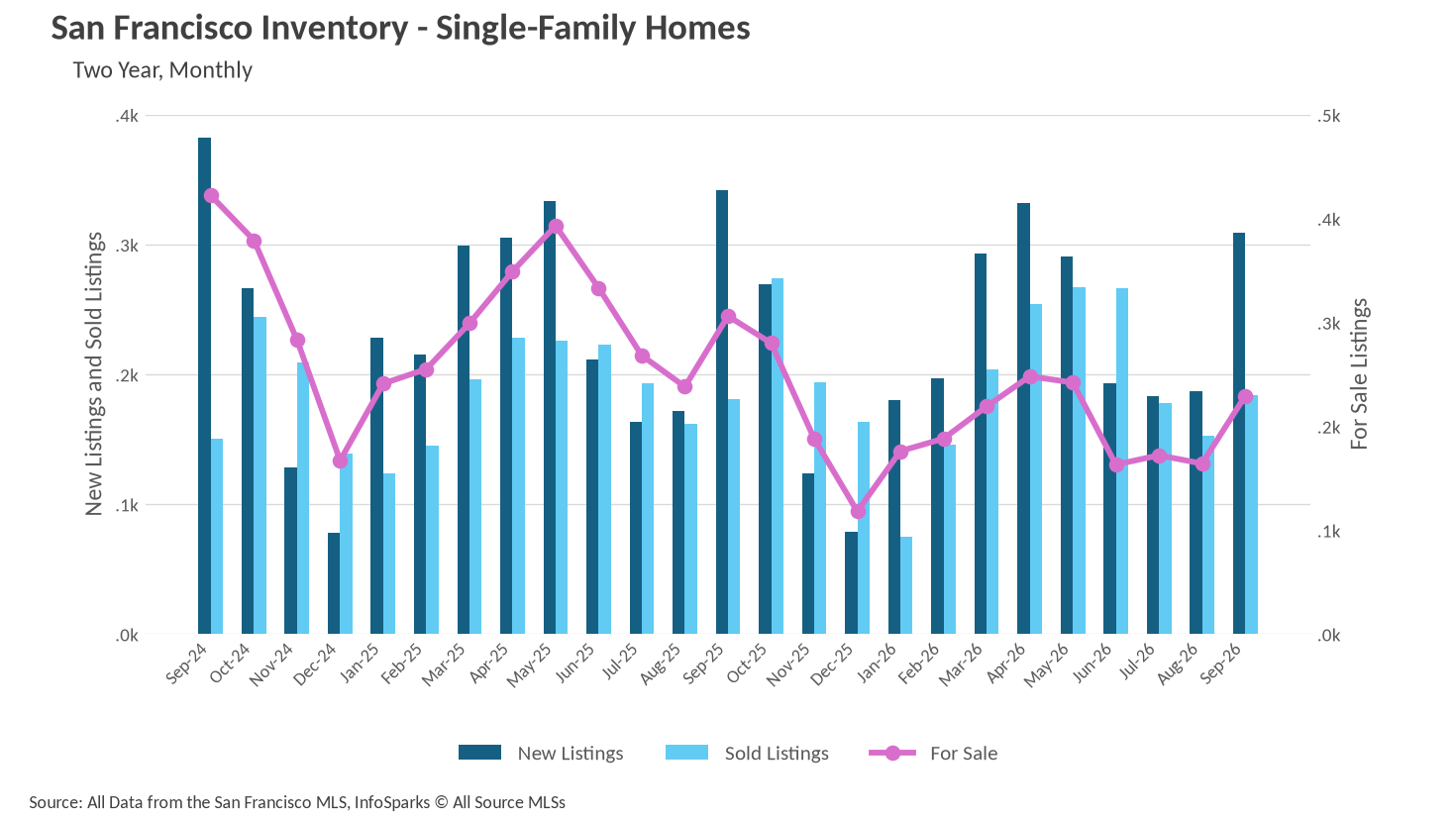
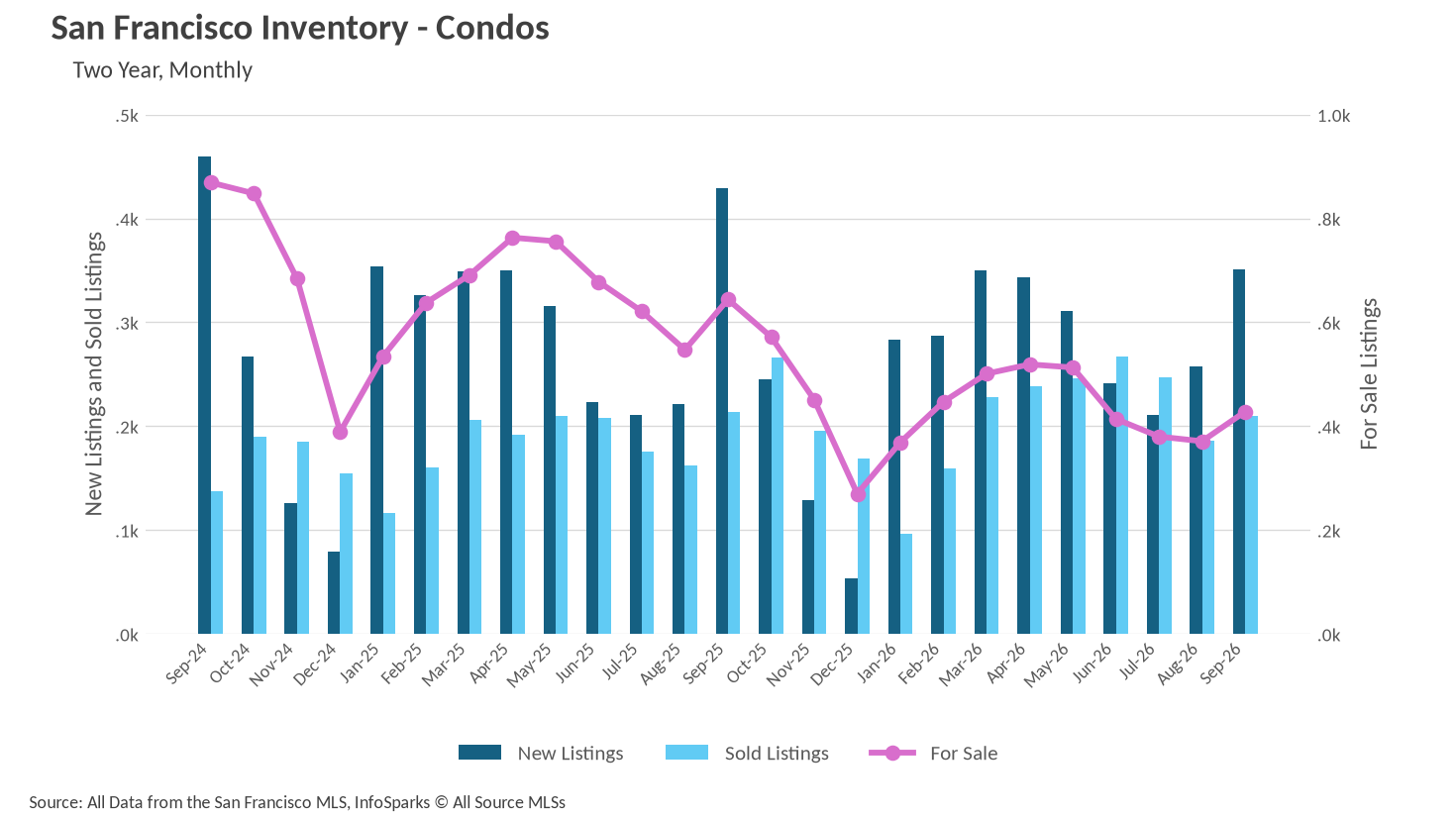
San Francisco Remains a Strong Seller's Market
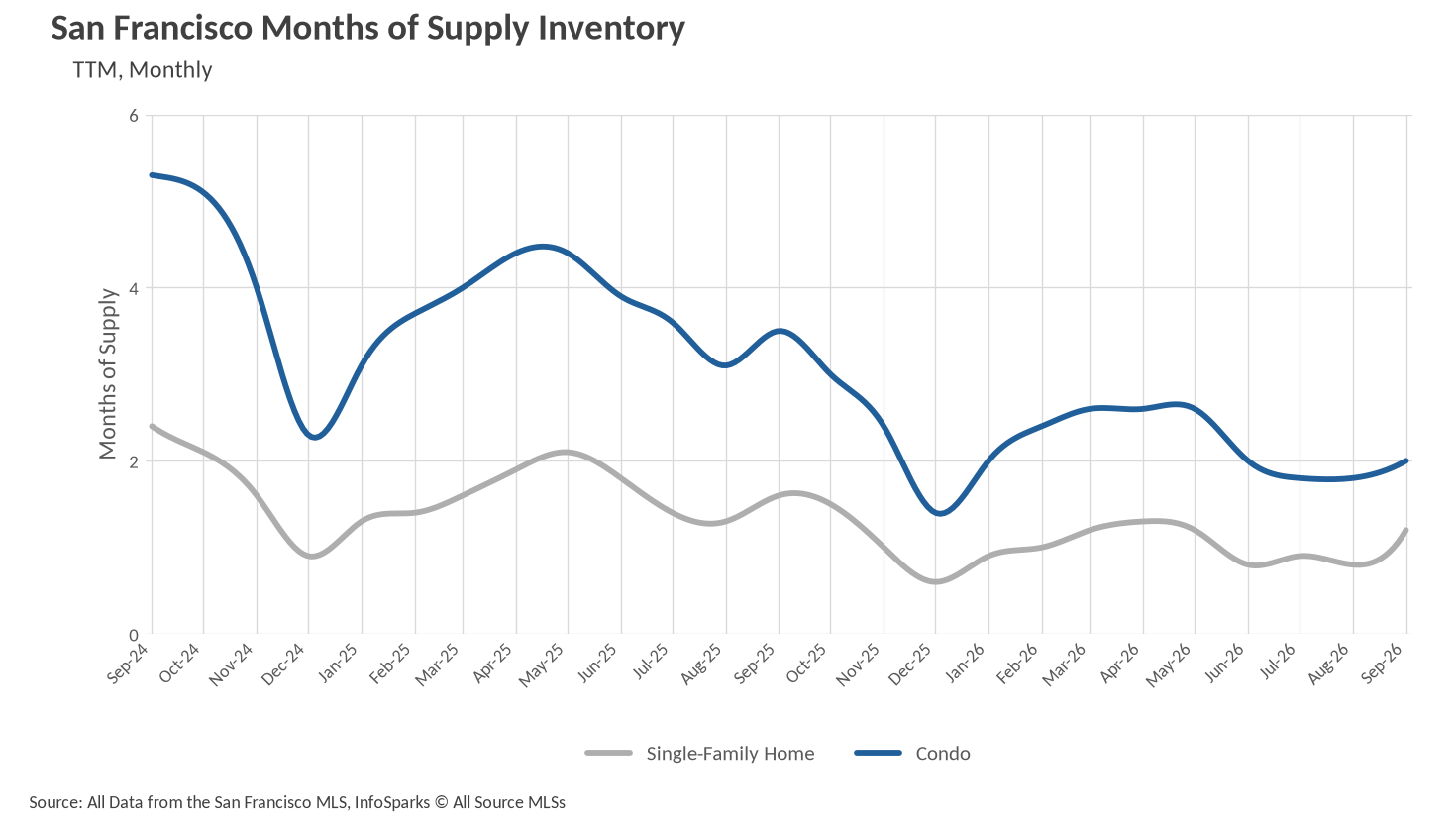
San Francisco continues to favor sellers, with inventory levels well below the three-month benchmark commonly used to indicate a balanced market. Single-family homes had just 1.2 months of supply in September, down 25% from a year ago, while condos stood at 2.0 months, down 43% from 3.5 months last September. The condo market has seen a particularly dramatic turnaround, shifting from buyer-friendly conditions earlier this year to a competitive seller's market. With limited inventory, fast sales, and strong bidding activity, sellers continue to hold the advantage heading into the final months of 2026.